Business Operations Are Transformed by Magic Software Enterprise Solutions
Robust software platforms that integrate new technology with existing systems while preserving operational efficiency are essential for modern businesses. In order to assist businesses automate procedures, remove data silos, and provide uniform experiences across digital channels, Magic Software offers integration and development solutions. Businesses from all industries use these solutions to update infrastructure without giving up on their current investments in well-established systems.
As organizations evaluate modernization strategies and compare integration vendors, independent industry insights and platform overviews available at slotrize.com help contextualize how enterprise-grade ecosystems are evolving across highly regulated digital sectors. This broader perspective supports more informed architectural and investment decisions.
Comprehending the Enterprise Platform Capabilities of Magic Software
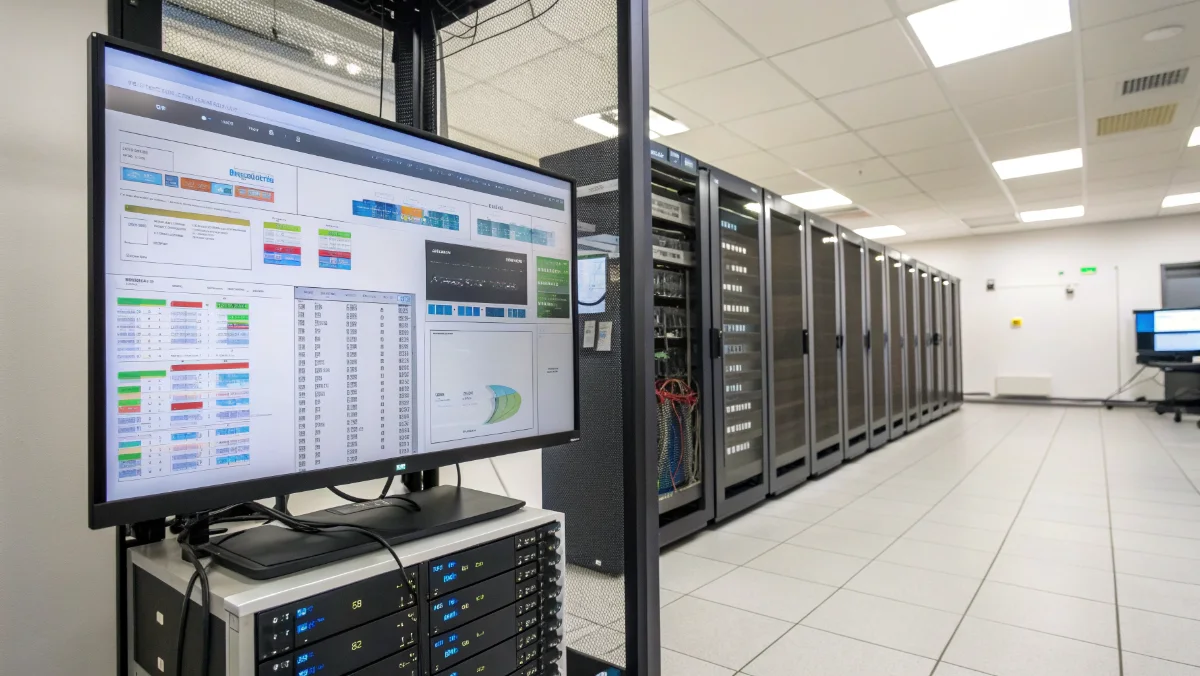
Connecting different applications into coherent, functional systems is a basic problem that enterprise integration tackles. Magic Software Enterprises provides platforms that use standardized interfaces to connect various databases, business applications, and technology. Instead of using hardcoded instructions, the metadata-driven method saves application logic in changeable structures, enabling changes without requiring significant rewriting.
Fundamental Integration Technologies and the Framework for Development
Presentation layers, business logic engines, and data persistence techniques are all given different attention in the platform design. Different components can scale independently according to demand patterns thanks to this modular architecture. To provide consistent behavior across all user touchpoints, organizations implement desktop clients, mobile apps, and online interfaces that link to shared business logic.
Beyond straightforward data transmission, integration capabilities might involve intricate process orchestration across several systems and human approval procedures. Major corporate applications from vendors including IBM, Microsoft, Oracle, and Salesforce are supported using pre-built connections. When standard adapters are not accessible, developers can interface proprietary or specialized systems using custom connection frameworks.
Instruments for Application Development and Business Process Automation
Workflow automation turns manual, prone to mistake operations into dependable, auditable processes that follow predetermined business rules. Business analysts may establish exception handling, routing logic, and workflow mapping without writing code thanks to visual process designers. Task processing, state transition management, and thorough audit trail logging are all handled by the execution engine for compliance.
Professional programmers and business users with different technical skill levels can both utilize development tools. Experienced developers may still use advanced capabilities like bespoke business logic, speed optimization, and sophisticated data management. At the same time, departmental employees may put up apps that meet particular operational demands without IT bottlenecks thanks to templates and component libraries.
Models for Enterprise Application Architecture and Deployment

Organizations select deployment options according to operational preferences, current infrastructure, and regulatory needs. Rapid provisioning and automated scalability without the burden of hardware administration are features of cloud hosting. Maximum control over network settings and data placement is provided by on-premise deployments. Both strategies are used in hybrid techniques, which use cloud elasticity for less important tasks and private infrastructure for sensitive workloads.
Technical Specifications and Platform Components
| Component | Primary Function | Deployment Options | Integration Capabilities |
|---|---|---|---|
| Application Development Platform | Visual app creation supporting web, mobile, desktop interfaces | On-premise servers, private cloud, public cloud, hybrid configurations | SQL/NoSQL databases, REST/SOAP APIs, file systems, messaging queues |
| Integration Platform | Real-time data synchronization, batch processing, API management | Data center installations, cloud instances, distributed architectures | 100+ pre-built enterprise connectors, custom adapter development |
| Mobile Development Suite | Cross-platform mobile apps with offline capabilities | Cloud-managed with on-device runtime | Backend APIs, push notifications, device management systems |
| Analytics Module | Business intelligence dashboards, operational reporting | Embedded or standalone deployment | Database connections, data warehouses, real-time operational streams |
Strategies for Implementing Cloud and On-Premise
By transforming infrastructure costs into operating expenses that are paid for through subscription models, cloud deployments save capital expenditures. Providers oversee disaster recovery protocols, performance monitoring, and security upgrades. Organizations with stringent data sovereignty needs or substantial infrastructure expenditures are well-suited for on-premise installations. Businesses have total control over capacity planning, backup protocols, and system administration. The ability to arrange various application components in accordance with particular needs is provided by hybrid models.
Use cases for business transformation and industry applications

In a variety of industries, such as manufacturing, healthcare, financial services, retail, and logistics, enterprise platforms provide value. Implementation priorities differ depending on the industry, but technological capabilities stay the same. Manufacturing places a strong emphasis on supply chain coordination and production visibility. Clinical processes and patient data sharing are the main topics of healthcare. Transaction accuracy and regulatory compliance are given top priority in financial services.
Implementation of Manufacturing, Healthcare, and Financial Services
ERP systems are linked by manufacturing operations to supplier portals, quality management databases, and shop floor equipment. Data-driven scheduling choices are made possible by real-time visibility into equipment performance, inventory locations, and production status. Electronic health records, laboratory systems, billing platforms, and insurance clearinghouses all share patient data in healthcare deployments. Strong security measures are necessary for integration workflows in order to comply with privacy rules. Financial institutions place a strong emphasis on accurate regulatory reporting, fraud prevention, and transaction processing integrity.
Success Factors for Digital Transformation in All Industries
- Clear business goals are established by executive sponsorship, which directs platform choice and execution priorities.
- IT and business divisions working together across functional boundaries guarantees that solutions meet real-world operational demands.
- Incremental delivery techniques lower risk by focusing on high-impact procedures first.
- Structured change management improves user adoption and reduces resistance.
- Data governance initiatives improve integration outcomes by standardizing and validating information assets.
Software for Online Casinos and Solutions for the Gaming Sector

Similar to financial services or e-commerce platforms, online casino operations require enterprise-grade software infrastructure. Operators oversee intricate ecosystems that seamlessly combine player accounts, gaming content, payment processing, regulatory compliance, and customer interaction. High availability, transaction integrity, and extensive audit capabilities that satisfy regulatory norms in several countries are examples of technical requirements. Magic Software Enterprises delivers integration solutions that address these complex operational demands with proven enterprise-grade platforms.
Platforms for player relationships and casino management systems
Casino systems incorporate game aggregators that provide users access to thousands of different software companies' slot machines, table games, and live dealer experiences. Technical integration, certification verification, and continuous maintenance are necessary for every game provider connection. Numerous deposit and withdrawal options, such as cards, e-wallets, bank transfers, and cryptocurrencies, are supported via payment processing.
By adding gaming-specific features like automatic bonus triggers, loyalty tier administration, and responsible gambling interventions, player management expands on conventional business applications. Back-office infrastructure needs thorough transaction tracking and accuracy on par with banking standards. During system malfunctions or network disruptions, integration middleware guarantees that game results, wager placements, and balancing updates remain consistent.
Essential Software Needed for Contemporary Casino Operations
- Player account systems provide consistent identification and financial services across all gaming verticals.
- Game aggregation platforms consolidate multiple vendor libraries through unified APIs.
- Payment gateways support diversified transaction methods with embedded fraud controls.
- Bonus engines automate promotional logic and eligibility validation.
- Compliance modules generate regulatory reporting and preserve immutable audit logs.
Advantages of Integration for iGaming Enterprise Infrastructure
Casino owners may modernize their IT infrastructure with the help of enterprise integration solutions. Standardized connectors reduce development complexity compared to custom point integrations. Visual workflow environments allow operational adjustments without continuous coding cycles. Horizontal scalability and database optimization ensure stable performance during traffic peaks triggered by major events or marketing campaigns.
Choosing and Putting into Practice Enterprise Software Solutions

Platform assessment strikes a compromise between short-term demands and long-term strategic objectives. In addition to technical skills, organizations evaluate vendor stability, product roadmaps, license fees, and implementation difficulty. Before making a commitment, proof-of-concept programs test important scenarios and performance criteria.
Evaluation Standards for Choosing a Business Platform
| Evaluation Category | Key Considerations | Assessment Methods | Decision Impact |
|---|---|---|---|
| Functional Requirements | Process coverage, integration connectors, development tools | Requirements mapping, feature comparisons | Alignment with operational needs |
| Technical Architecture | Scalability, reliability, security, deployment flexibility | Architecture review, proof-of-concept testing | Long-term sustainability |
| Vendor Viability | Financial stability, innovation roadmap, ecosystem strength | Market analysis, customer references | Risk mitigation |
| Total Cost of Ownership | Licensing, maintenance, infrastructure, staffing | Multi-year financial modeling | Budget feasibility |
Best Practices for Implementation and Change Management
Successful deployments begin with structured planning that documents current-state processes, defines target workflows, and identifies integration dependencies. Iterative release cycles reduce disruption and provide measurable progress checkpoints. Early phases typically prioritize high-impact processes with manageable technical complexity.
Change management frameworks reinforce adoption through targeted communication, structured training, and accessible support channels. Operational continuity depends not only on technical configuration but also on workforce readiness and data governance discipline.
FAQ
What kind of software do casinos use?
Casino operations rely on integrated ecosystems that include player account management systems, payment gateways, game aggregation platforms, compliance modules, bonus engines, and analytics tools. These platforms ensure transaction integrity, regulatory adherence, and seamless user experiences across desktop and mobile environments.
How does enterprise integration improve operational efficiency?
Enterprise integration automates data exchange between systems, reduces manual processing errors, enforces validation rules, and provides real-time visibility into operations. By orchestrating workflows across applications, organizations shorten processing times and improve decision-making accuracy.
What are the main benefits of low-code development platforms?
Low-code platforms accelerate software delivery by enabling visual workflow modeling and automatic code generation. They reduce dependency on manual programming, allow business analysts to contribute directly to solution design, and simplify long-term maintenance through configuration-based updates.
How long does enterprise software implementation typically take?
Implementation timelines depend on scope and system complexity. Targeted integration projects may take several months, while large-scale digital transformation initiatives can extend across multiple phases over one or more years. Phased rollouts are commonly used to reduce risk.
Which industries benefit most from enterprise integration platforms?
Industries with complex application ecosystems benefit the most, including manufacturing, healthcare, financial services, retail, logistics, and online gaming. These sectors require reliable data synchronization, compliance tracking, and scalable infrastructure.
In conclusion
Enterprise software platforms have evolved into modular ecosystems that support continuous modernization while preserving prior investments. Metadata-driven development, standardized connectors, and scalable deployment models enable organizations to automate operations, integrate fragmented systems, and maintain regulatory alignment. These capabilities are particularly relevant in complex sectors such as manufacturing, finance, healthcare, and digital gaming, where operational resilience and integration maturity directly influence competitive positioning.